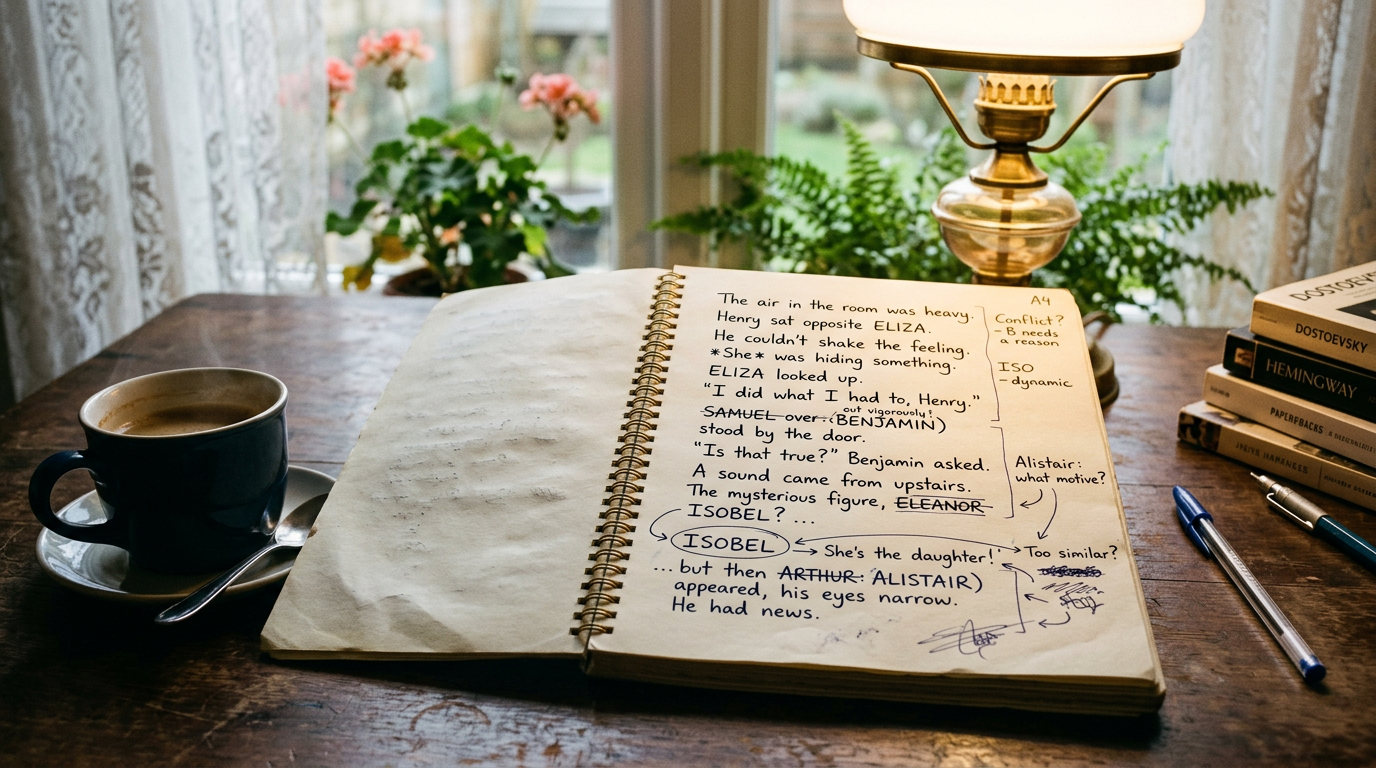
You can feel it before you can name it. The manuscript is finished, or close, but the order is wrong. A revelation lands with a shrug because the reader already guessed it. The middle sags. Two chapters are doing the same job. You know something needs to move — but the book is too big to hold in your head, and every time you try to fix it you seem to make it worse.
Restructuring a novel doesn't have to break it. The trick is to stop thinking in sentences and start thinking in scenes. You move the pieces first, at a level high enough to see the whole shape, and you rewrite the connecting tissue last. Do it in that order and you can rearrange a whole book without losing the parts that already work.
Here's the process, step by step.
First, make sure it's actually a structure problem
Not every bad feeling about a draft is structural. Before you tear anything apart, figure out what you're actually looking at, because moving scenes won't fix prose that's just flat.
It's probably structure if:
- The middle drags no matter how much you tighten individual lines.
- Readers keep getting confused about when things happen.
- A twist or emotional beat isn't landing, and you suspect it's set up in the wrong place.
- Two scenes accomplish the same thing, so one feels redundant.
- The story doesn't really start until chapter three.
It's probably not structure — it's prose or scene-level craft — if the order feels right but individual scenes are slow, the dialogue is stiff, or the voice is off. Those get fixed line by line, not by moving furniture.
Diagnose first. Restructuring is expensive work; you don't want to spend it solving the wrong problem.
Make a copy you can't lose
Before you move a single scene, duplicate the manuscript. This is the step people skip and regret.
Restructuring means you'll be deleting transitions, cutting bridges, and rewriting openings — and halfway through you may decide the old order was better after all. If your only copy is the one you're hacking apart, you've got nowhere to go back to. So save a clean version of the current draft under a name you'll recognize later (dated, not "final_v7"), and only then start cutting.
Some writing tools keep point-in-time copies for you so you don't have to manage a folder full of files. However you do it, the rule is the same: never restructure your only copy.
Work at the card level, not the prose level
This is the core of it. The reason restructuring feels overwhelming is that you're trying to do it inside the prose — scrolling through 90,000 words, losing your place, getting sucked into fixing a paragraph when you meant to be moving a chapter.
Zoom out instead. Reduce every scene to a card with three things on it:
- What happens — one line. "Mara finds the letter."
- Whose POV and where it takes place.
- What changes — what's different at the end of the scene that wasn't true at the start. If nothing changes, that's a flag.
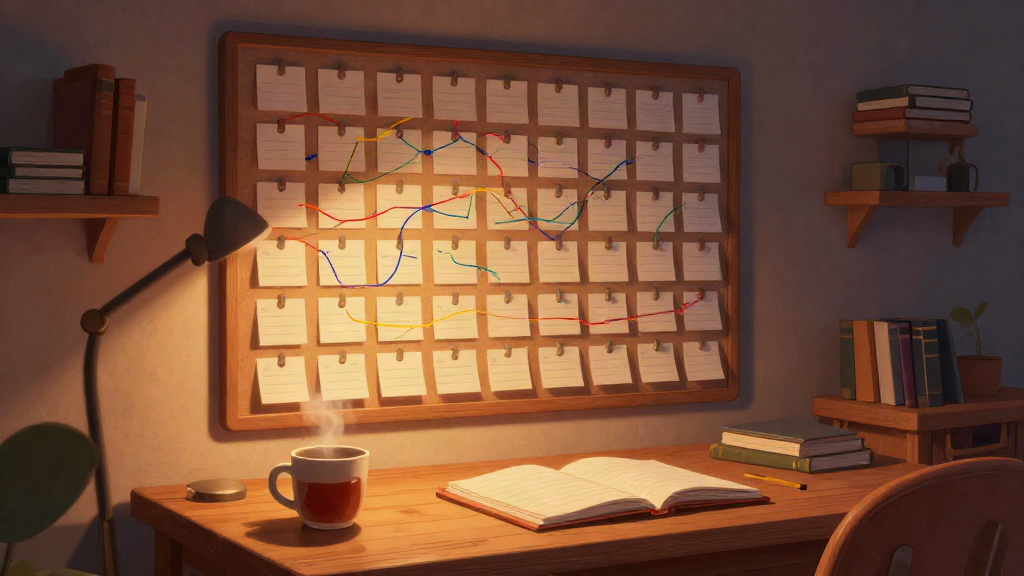
Now you're working with forty cards instead of ninety thousand words. You can lay them out, see the whole arc at once, and spot the problems that were invisible up close: the three-scene stretch where nothing changes, the subplot that vanishes for a hundred pages, the reveal sitting two chapters too late.
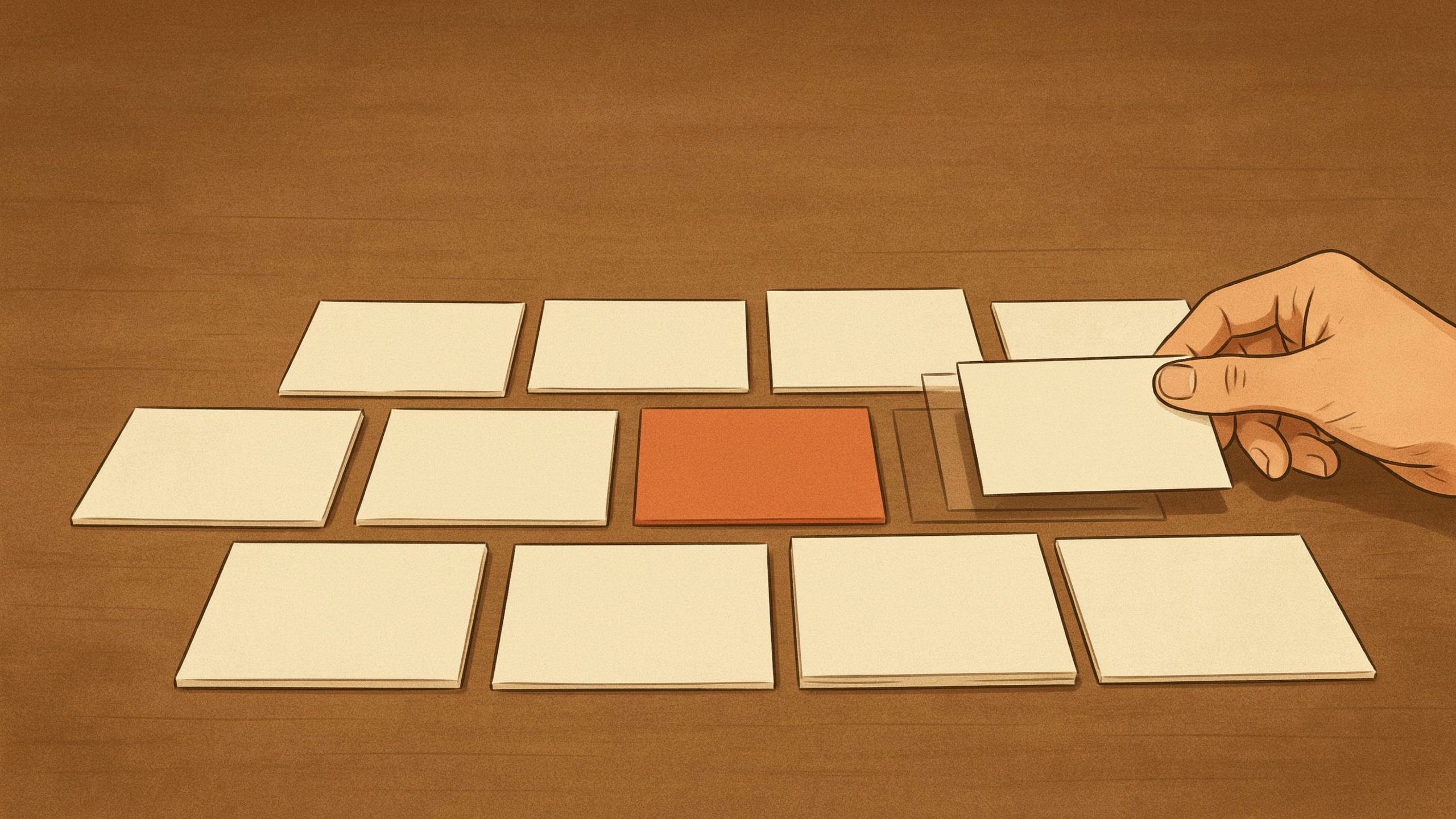
Then move the cards. Physical index cards on a table work perfectly. So does a corkboard view like Pendrilo's, where each scene is a draggable card and reordering the cards reorders the chapters underneath — so you're rearranging the actual book, not a separate map you then have to reconcile by hand. Either way, the point is the same: make structural decisions where you can see the structure.
Move first, rewrite second
When you drag a scene to its new home, the temptation is to immediately fix everything around it — smooth the transition, adjust the references, patch the timeline. Resist.
If you stop to rewrite after every move, two things happen. You lose momentum, and you end up polishing prose in scenes you might cut ten minutes later. Get the whole order right first. Move every card until the shape is what you want. Only then go back and fix.
Think of it as two passes: a structural pass where you only move, and a repair pass where you only rewrite. Keeping them separate is what stops restructuring from spiraling into a full rewrite you didn't mean to start.
Fix the seams last — and know what to check
Once the order is settled, the connecting tissue is what actually broke. Moving scenes leaves predictable damage. Walk the manuscript looking for it:
- Transitions. The old scene led into the next one; now it leads somewhere else. The openings and closings of moved scenes almost always need new first and last lines.
- Setups and payoffs. If you moved a reveal earlier, its setup might now come after it. Foreshadowing has to precede the thing it foreshadows.
- Information order. A detail introduced in the old chapter 12 might now be needed in chapter 6. Check that the reader knows what they need to know when they need to know it — and that you're not re-explaining something they already learned.
- Timeline and continuity. Seasons, days of the week, how long since the last event, who currently knows what. Reordering scenes is the fastest way to introduce a continuity error. A story bible or character reference is worth a pass here.
- Callbacks. "As she'd said the night before" only works if that night still comes first.
This is slow, careful work, but it's bounded — you're repairing seams, not rebuilding the book. That's the payoff for having moved everything first.
Test the new order
When the seams are patched, read the whole thing for momentum — ideally out loud, or in a format that isn't your usual editing screen, so it feels less familiar. You're not checking prose here. You're checking whether the story pulls you forward: whether the middle still sags, whether the reveal now lands.
If you can, hand the new structure to a beta reader who hasn't seen the old one. They can't be biased by the previous order, so if something still feels out of place, they'll feel it cold.
Common ways to restructure a novel
Most structural fixes fall into a handful of patterns. If you recognize yours, you already know roughly what to do:
- Start later. The most common note in indie fiction: the book opens a chapter or two before the story does. Cut the runway; start closer to the first real change.
- Move the reveal. A twist the reader guesses early often works better delivered early, turning a weak "gotcha" into dramatic irony.
- Intercut two threads. Two subplots told in separate blocks can drag; alternating them keeps both alive.
- Collapse redundant scenes. When two scenes do the same job, merge them and give the survivor the best material from both.
Restructuring a novel is never as clean as moving a card and calling it done. But if you diagnose the real problem, protect your draft, work where you can see the shape, and save the seam-work for last, you can reshape an entire book without unraveling what was already working.